
Podcast Starter Guide
My low-key way of running The Career Flipper Podcast
CAREER FLIPSHOW-TOS
Jenny Dempsey
1/7/20266 min read
How I Started a Podcast (Before I Ever Hit Record)
I get asked a lot how I started my podcast, and I want to be very clear about something upfront:
I’m not a professional podcaster.
I didn’t have a big budget.
I paid for this myself.
And there are probably “better” ways to do all of this.
This is just how I did it, slowly, imperfectly, and one decision at a time.
Please know there are NO paid affiliate links in this article. Everything I am linking to is what I used with the pure intention of helping you with your podcast.
The Pre-Recording Work (This Matters More Than You Think)
Before I ever recorded a single episode, there was a surprising amount of quiet behind-the-scenes work.
Picking the name
The name The Career Flipper came to me in a dream. I woke up with it clear as day and wrote it down. I didn’t overthink it. I trusted it.
Creating a logo
I made the logo myself using Canva. Nothing fancy. I just played around until it felt right.
Choosing a launch date
I picked a launch date — July 11, 2024 — before I felt ready. Having a date gave me something to work toward instead of endlessly “planning" and saying I'd do it, but never actually get to it.
Buying a domain
I bought a domain name early on so the podcast felt real and grounded, even while it was still just an idea. I got mine through tierra.net as I used to work with them back in the day and know they are legit!
Creating a website
Before I recorded anything, I also created a simple website on Wix.
Nothing fancy. No big build. I just wanted a place the podcast could live, somewhere I could point people when they asked, “What is this?”
I built the site on Wix and kept it really simple: a short description of the show, a place for episodes, and a little context about why I was making it. I connected that site to the link shared on my podcast profiles so everything pointed back to one place.
The site cost me about $236 for the year, and I paid for it myself while I was laid off. At the time, it felt like a stretch, but it also made the podcast feel real in a way that mattered to me.
Side note: Wix is great, don't get me wrong, but I'm now on Hostinger and I really love it. It's also a lot easier on my budget!
Researched stuff
A lot of this research happened by me casually sliding into people’s DMs and asking:
“Hey, I see you have a podcast, do you mind sharing what you use?”
Most people were surprisingly generous.
Reaching Out to Guests (Before Anything Existed)
Once I had the idea and the name, I started reaching out to potential guests, even though the podcast technically didn’t exist yet.
This part felt scary, but I kept it simple and honest.
What I said in DMs
I’d usually say something like:
“Hi! I’m starting a new podcast called The Career Flipper where I talk to people who’ve made interesting career changes. I’m still early in the process because I'm trying to make a career flip of my own, but your story stood out to me. Would you be open to chatting on an episode?”
That’s it. No pitch deck. No pressure.
Some people said yes. Some didn’t respond. Some said no. That’s normal.
Scheduling the Conversations
When someone said yes, I scheduled the interview using:
Calendly free plan for easy scheduling
Google Calendar to keep track of the meetings
A Zoom link on those calendar invites
I kept everything simple:
One conversation
30 minutes to an hour in length
Audio only
Recording Before I Launched
I started interviewing people in May 2024, a full two months before launch.
My goal was to have a bucket of episodes ready before anything went live.
I recorded eight episodes in advance.
Why this helped:
Less pressure
No weekly scramble
Time to learn and adjust
Space to decide if I even liked podcasting
I saved all audio files:
On my computer
And backed them up in Google Drive
My Recording Setup (Very Basic)
Before recording, I bought:
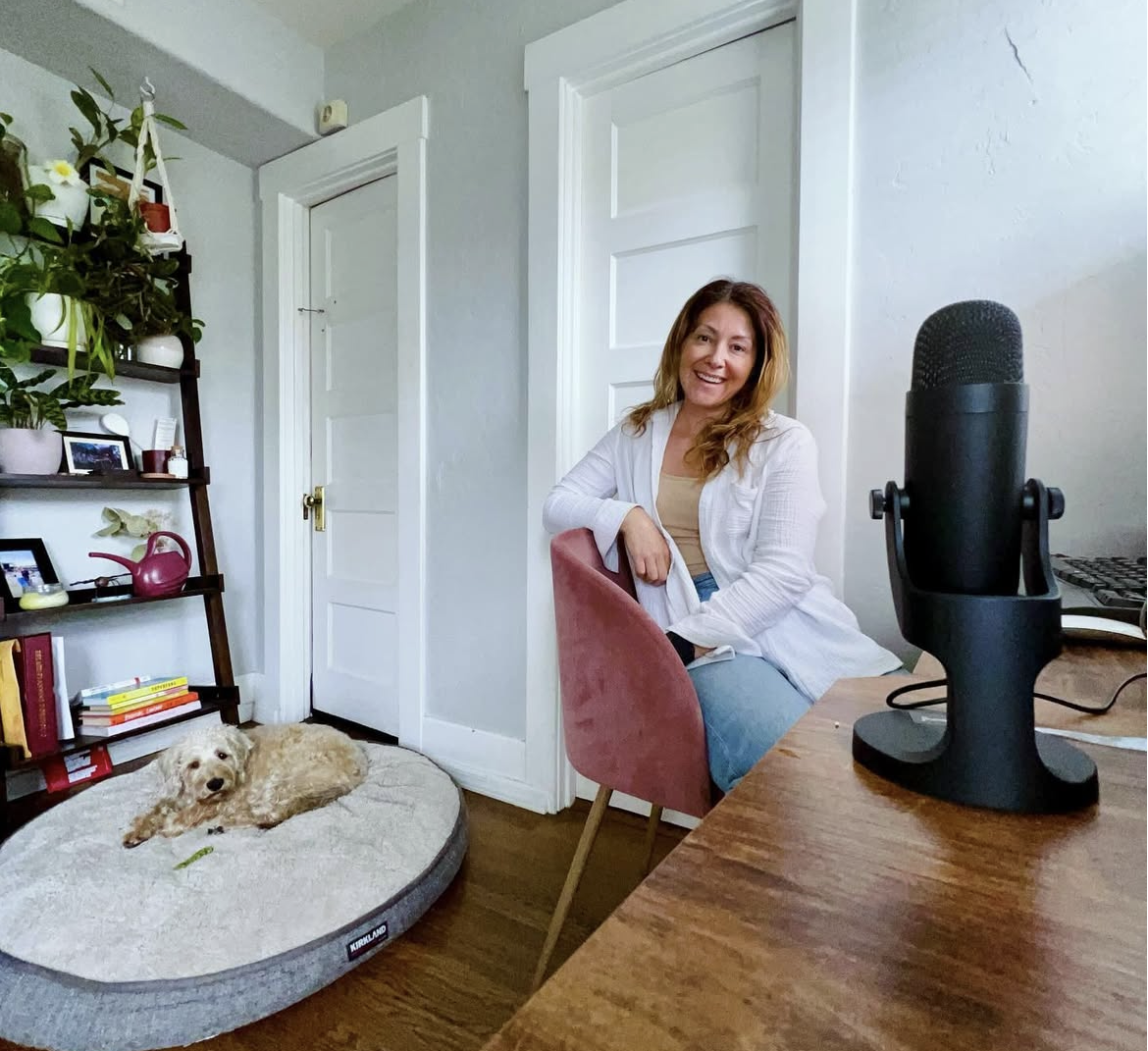
A basic microphone (linked lower in the article, nothing fancy)
An isolation microphone cover (also linked, but this one was gifted)
That’s it.
I recorded on Zoom using:
Audio only
The basic paid Zoom plan so I could save files locally
No video. No studio. No stress.
Editing the Episodes
After recording, I edited each episode myself using GarageBand on my MacBook.
I focused on:
Cutting long pauses
Removing obvious interruptions
Keeping conversations natural
I didn’t aim for perfection. I wanted the episodes to sound human.
Choosing a Podcast Distributor
Once I had episodes recorded and edited, I chose a podcast hosting platform.
I used Simplecast.
This is where you upload your episodes, and it distributes them to Apple Podcasts, Spotify, and other platforms for you.
Upload once. It handles the rest.
Artwork and Episode Graphics
I went back to Canva to create:
Podcast cover art
An episode artwork template
For guest photos:
Sometimes guests sent one
Sometimes I used LinkedIn photos with permission
I reused the same template for every episode.
Transcripts (This Changed Over Time)
At first, I used Riverside.fm mainly to upload episodes and generate transcripts.
Later, a friend recommended Descript, which I found easier for transcripts and pulling quotes.
Once I switched, I canceled Riverside and used Descript instead.
Creating Social Accounts (But Not Posting Right Away)
Before launch, I:
Created an Instagram account
Created a LinkedIn group
But I didn’t post much right away. I just wanted to snag the handles.
I let the idea simmer. I teased things slowly. I didn’t want it to feel forced.
Launch Day
The podcast officially launched on July 11, 2024.
I already had:
Episodes recorded and scheduled
Social media scheduled
Hosting set up with email account
That made launch feel exciting instead of panicky.
Budget Breakdown: What This Actually Cost Me
I want to be very clear about this part, because people often assume podcasts are expensive or complicated.
I paid for this myself, month by month, out of my own bank account. No sponsors. No studio. No team.
Monthly Costs (at the time)
Zoom
~$20/month
Used to record audio-only interviews and save files locally.Simplecast
~$15/month
Used to host episodes and distribute them to Apple Podcasts, Spotify, etc.Riverside.fm
~$20/month (used temporarily)
I mainly used this to upload finished episodes and generate transcripts before switching tools.
Approximate monthly total (at peak):
👉 $55/month
Once I switched from Riverside to Descript, that cost dropped.
One-time / already-owned costs
Microphone: basic mic (no affiliate link)
Microphone Isolation Shield: (gifted to me by my boyfriend)
Laptop: my existing iMac
Music: I recorded my own song for the intro/outro
Design: created everything myself in Canva
No studio. No paid editor. No paid designer.
Time Costs
This part surprised a lot of people, and honestly, it surprised me too once I added it up.
Per episode (on average)
Recording: ~1 hour
(The actual interview)Editing: ~2–3 hours
This included:Editing the main conversation
Adding my own recorded intro/outro
Adding music
Final audio cleanup
Scheduling + prep: ~30–60 minutes
Uploading the episode
Writing the episode title/description
Scheduling it in Simplecast
Creating all the social content for it
Total time per episode
👉 About 3–4 hours per episode
Once I had a rhythm, it leaned closer to 3 hours, but early on it took longer.
Why This Matters
I’m sharing this not to discourage anyone, but to be honest.
I loved the conversations.
I loved the guests.
I loved what the podcast gave me.
But time adds up, especially when you’re also:
Working a full-time job (which I took one on again in Jan 2025)
Building something else on the side
Paying for it yourself
Understanding the real time + money cost is what eventually helped me decide how the podcast needed to evolve.
Final Thoughts
When I step back and look at it now, the scope of this surprises even me.
I recorded 87 episodes. I spent somewhere between 260 and 350 hours (about 2 months of full time work!) recording, editing, scheduling, and producing them. And during a time when I was laid off and figuring out how to stay afloat, I paid for the podcast out of my own pocket, month after month — hosting, recording tools, and the basics it took to keep it going.
And still, I don’t regret it.
The podcast gave me structure during a really uncertain season. It connected me to people all over the world who all became mentors to me. It reminded me that I wasn’t alone in questioning my path or wanting something different. It gave me confidence when I needed it most, and it helped me trust myself again.
Would I do some things differently now? Probably. But I don’t believe in waiting until you have the perfect plan, the perfect setup, or the perfect circumstances. This worked because I started where I was, with what I had, and figured the rest out as I went.
If you’re thinking about starting a podcast and feel unsure, overwhelmed, or “not ready,” I hope this helped make it feel a little more possible.
And if you have questions, about tools, process, costs, or just want a real answer from someone who’s been there, you’re welcome to slide into my DMs. I’m always happy to share what I learned.